The £8.90 That Costs More Than £8.90
This morning I paid £23.15 to send a 410g parcel from London to the United States.
Had I bought the same Royal Mail International Tracked service online, I could have paid approximately £8.90 less.
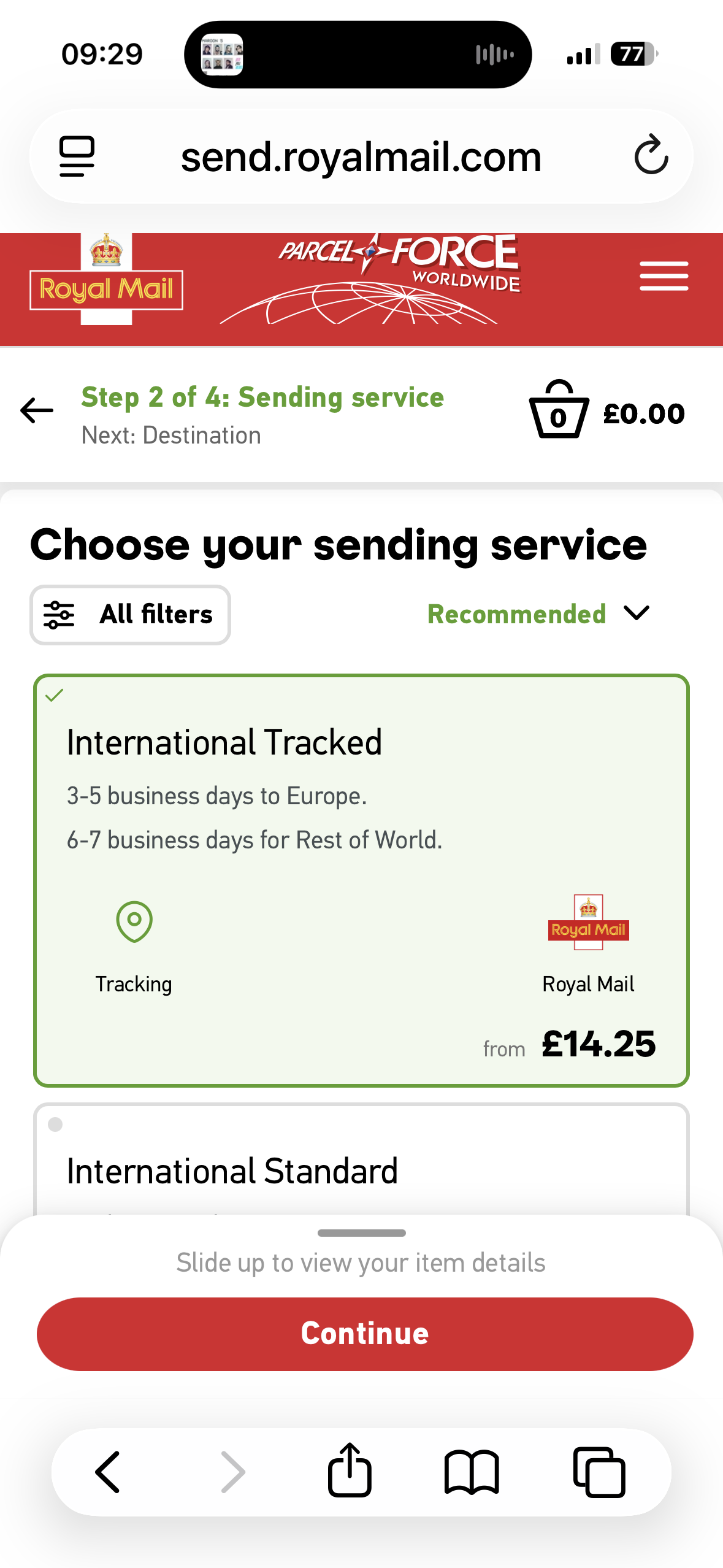
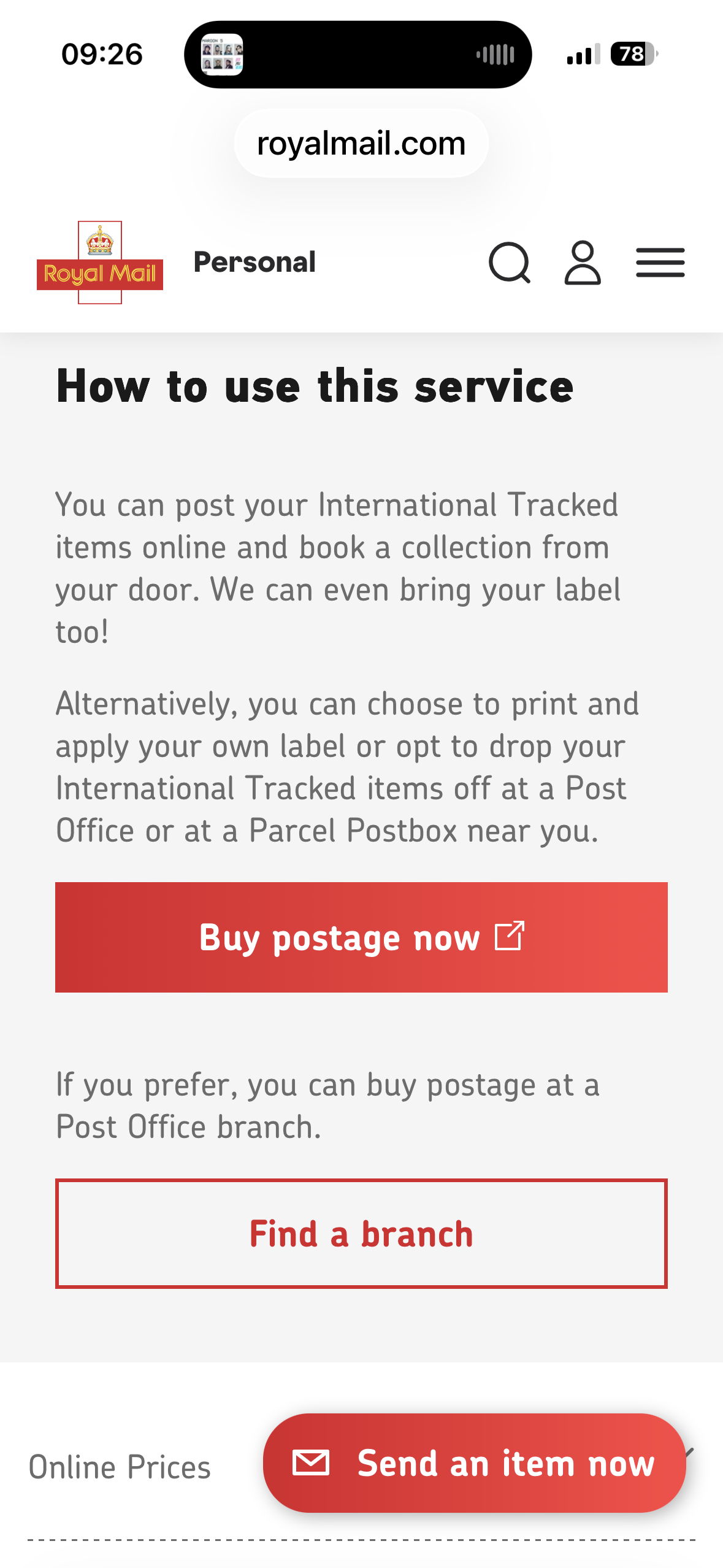
Before buying shipping packaging yesterday, I went on Royal Mail’s website and was quoted £14.25 for International Tracked which showed I could either buy postage online or, if I preferred, buy it at a Post Office branch.
I left this morning to take my son to school and walked to the nearby Post Office and after waiting 8 minutes, I was directed to scan a QR code to complete US Customs info. Following, my item was weighted at 410grams in a waterproof envelope and I was told the cost was £23.15.
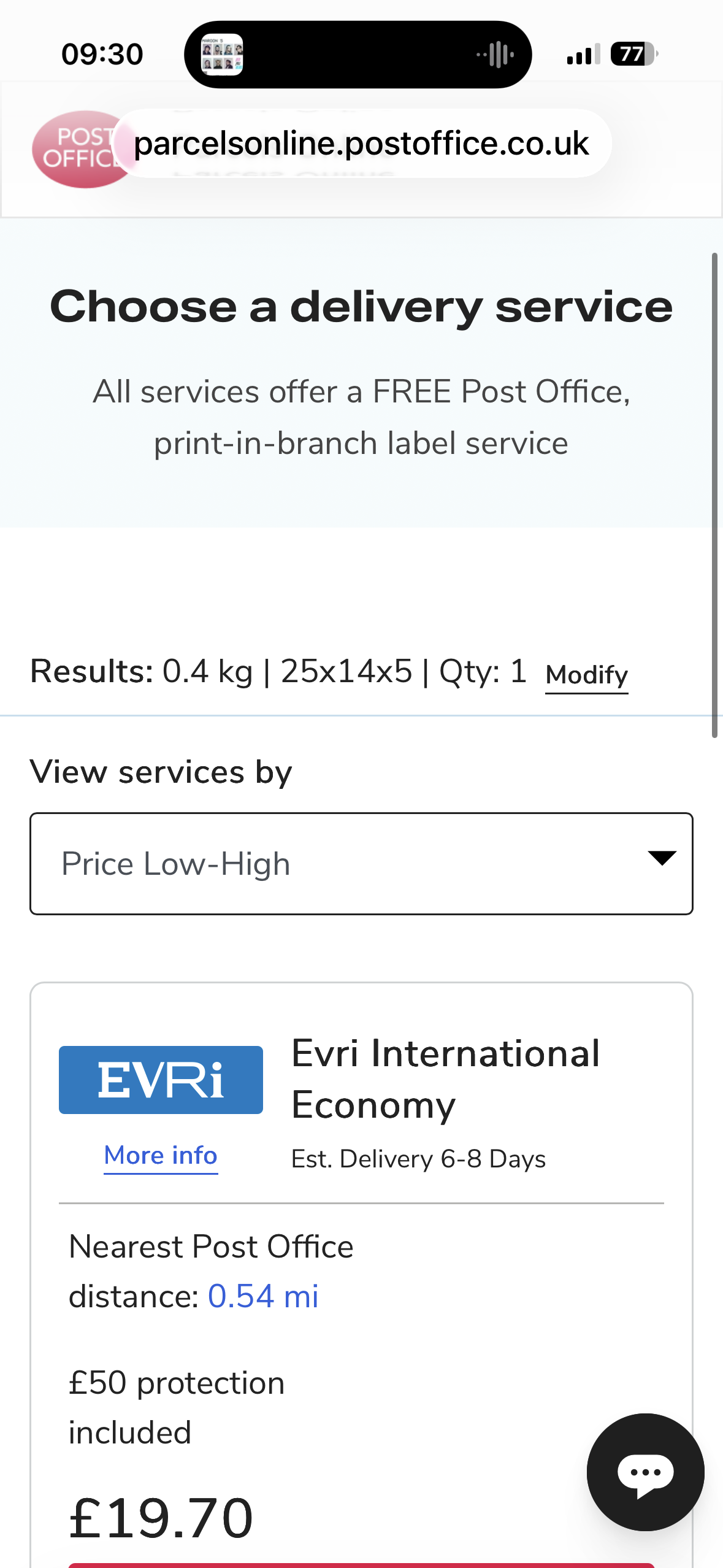
The staff said I could get out of the queue again and order online and then show them the QR code and maybe it would be less. I clicked Shipping from the Royal Mail US customs page and was given options only to send via Evri (which I loathe for their infamous delivery issues that a name change didn’t fix (uh hem Hermes) for £19.70
I had already spent time buying the gifts, finding suitable packaging, packing everything and travelling to the Post Office. I wasn’t carrying it around London for another day to save £8.90.
Sometimes the inefficient choice has value
The parcel was for a child in America. Inside was a toy he had bought himself in Peter Jones in Chelsa while visiting London for the first time. My son and he went to first grade together in California and it had been 3 years since they’d seen each other. He accidentally left behind his toy in my son’s bedroom. We had no way of getting it to him before he boarded his flight home.
I could have simply ordered him something online. That probably would have been cheaper than posting his original toy back to him. But it wouldn’t have been his toy. Plus, we added a couple of things from the Science Museum, where the boys had spent ages together, including a baseball cap that uses elements from the periodic table to spell GENIUS. (I want one!!!)
Economically, ordering replacement gifts directly from an American retailer would almost certainly have made more sense. But the experience of opening a gift FROM London is different for 10 year old than getting something ordered from Amazon.com by your friends in London.
The package carries a little piece of his trip to London.
And this is where organisations can misunderstand customer behaviour.
We don’t always choose the cheapest path.
But somewhere around 99.99% of the time we want to understand the price of the path we’re choosing. What’s the cost of not telling me? I’m going to file a complaint. Because when I came back home and opened up the Royal Mail website I still the option of sending via Royal Mail not Evri.
That means Royal Mail will receive my complaint, categorise it, have someone read it, investigate what happened, respond, possibly escalate it and perhaps process a goodwill payment.
Even using conservative assumptions, suppose a complaint requires just 20 minutes of employee handling time.
If 100 customers complain about the same issue, that is more than 33 staff hours.
At 1,000 complaints, it becomes roughly 333 hours.
And that doesn’t include management time, escalation, refunds, complaint-platform costs or the operational cost of identifying recurring issues.
Then there is the customer side.
I have already spent time going back through the website, taking screenshots, finding my receipt and trying to understand why the prices were different.
Suppose a customer spends only 30 minutes dealing with the problem.
One thousand customers would collectively lose 500 hours.
So a tiny piece of missing information in a digital journey could easily generate hundreds of hours of entirely avoidable work.
And complaints are only one possible outcome.
Some customers won’t complain. They’ll simply choose Evri next time. Or DHL. Or another courier.
Or they’ll decide that posting British gifts internationally is too expensive and buy something online in the recipient’s country instead.
Those customers are much harder to measure. There is no complaint ticket. No angry email. No red flag in the CRM. They simply disappear.
This is why CX isn’t just about making customers happy.
There is a tendency to talk about Customer Experience primarily in terms of loyalty, delight and emotional connection.
But good CX is also about preventing unnecessary work. One sentence could have changed this entire experience: “Post Office branch prices differ from our online prices and may be higher.” (The irony is that you’ll still have to queue and hand over your parcel to the person to register!)
Better still, show both prices at the moment the customer is choosing: Buy online: £X, buy at a Post Office: £Y
Then let me decide. I thought going to the post office would ensure I had the right service for the size and weight of my parcel.
And that is often what good customer experience comes down to:
Not eliminating every bit of friction, but giving customers the information they need to make an informed trade-off.
Because the cost of unclear communication isn’t just the £8.90 one customer paid.
It’s the complaints.
The handling time.
The repeat contacts.
The customers who choose competitors.
And the customers who simply decide that next time they won’t both at all.
Jobs to be Done: the problem with optimising the transaction
Clayton Christensen’s Jobs to be Done theory helps explain why experiences like this keep happening. Organisations tend to structure themselves around products, channels, customer segments and internal processes, while customers are trying to make progress in a particular circumstance. Those are not the same thing.
It is also why friction can be so difficult for organisations to see. The website team sees a digital journey. The pricing team sees a tariff. The Post Office counter sees a parcel transaction. Each part may be doing exactly what it was designed to do, while nobody is looking at the whole job from the customer’s perspective.
In our case, the job was not simply send a parcel to America. It was to get this particular parcel, containing things that matter to us and to a child we care about, safely back to him in America without turning it into a multi-day project.
There were several dimensions to that job. Functionally, we needed to get the objects from London to the United States safely. Emotionally, we wanted our friend to get his forgotten toy back and experience that little moment of joy when he opened the package and realised it was there. Socially, we wanted to send something thoughtful that represented the time he and my son had spent together in London. And there was an effort constraint: this needed to fit into everyday life–school, work, building a business and everything else competing for time.
That is what gets missed when organisations optimise only for the transaction. From Royal Mail’s perspective, the customer is buying postage. From mine, postage was only one step in a much larger job.
The extra £8.90 itself was not catastrophic. The problem was that the trade-off was invisible until the very end. Had I known that buying at the counter could cost roughly a third more, I could have decided whether the convenience was worth paying for. I may still have chosen it. What mattered was being able to make that decision knowingly.
There were missed opportunities in the physical journey too. If Royal Mail wants customers to complete more of the process online, why not make that obvious when they arrive? A simple sign or QR code saying, “Sending internationally? Complete customs and buy your postage online here. We’ll print the label for you at the counter,” could reduce queues, reduce staff handling and prevent exactly this kind of frustration.
That is the bigger lesson: companies often optimise transactions while customers are trying to make progress.
And the same thing happens constantly in B2B.
We design buying journeys around products, qualification stages, CRM fields, demos, proposals, procurement and internal approvals. But the buyer is trying to achieve something much bigger. They may be trying to solve a problem, reduce risk, convince colleagues, protect their reputation, make a defensible decision and actually get change through their organisation.
If we focus only on what we think the customer is buying, we can miss the wider job and all of the friction we are creating around it.
This is why Jobs to be Done, Design Thinking and customer journey work are so valuable. They force us to look beyond the transaction and ask better questions:
What progress is the customer actually trying to make? What are we making unnecessarily difficult along the way? What must we do to avoid cognitive dissonance? What would cause them to have the best outcome? What actually is the best outcome?
At Moxie89
I help organisations uncover the jobs customers and buyers are really trying to accomplish, and identify where internal processes, assumptions and silos are creating unnecessary friction.
Because improving the customer experience often starts with recognising that what you sell and what the customer is trying to achieve are not necessarily the same thing - whether you are selling to consumers or businesses and whether you’re selling £5 or £5M.